Man, let me tell you about this Airwallex interview for the KYC gig. I was actually pretty excited because I’ve been messing around with compliance stuff for a good while now, and Airwallex just sounded like a cool place to be.
I started by just sending in my resume, nothing fancy, straight through their careers page. Took maybe a week and a half before I heard back. It was just a quick email for a screening call with an HR person.
The Initial Screening: Getting the Vibe
The first call was super standard. The HR lady—she was nice—just walked me through my CV, asking the usual, “Why Airwallex?” and “What are you looking for in your next role?” I kept it simple: I love the fintech space, and my experience in AML/KYC aligns perfectly with what I saw in the job description.
- They hit me with the salary expectation question early. I gave them a range based on my research.
- We talked about my biggest achievement in my last compliance role—I focused on process improvement, cutting down the onboarding time by like 20%.
- The whole thing lasted maybe 25 minutes. Felt good about it.
A few days later, I got the green light for the first technical round. This is where the real fun started.
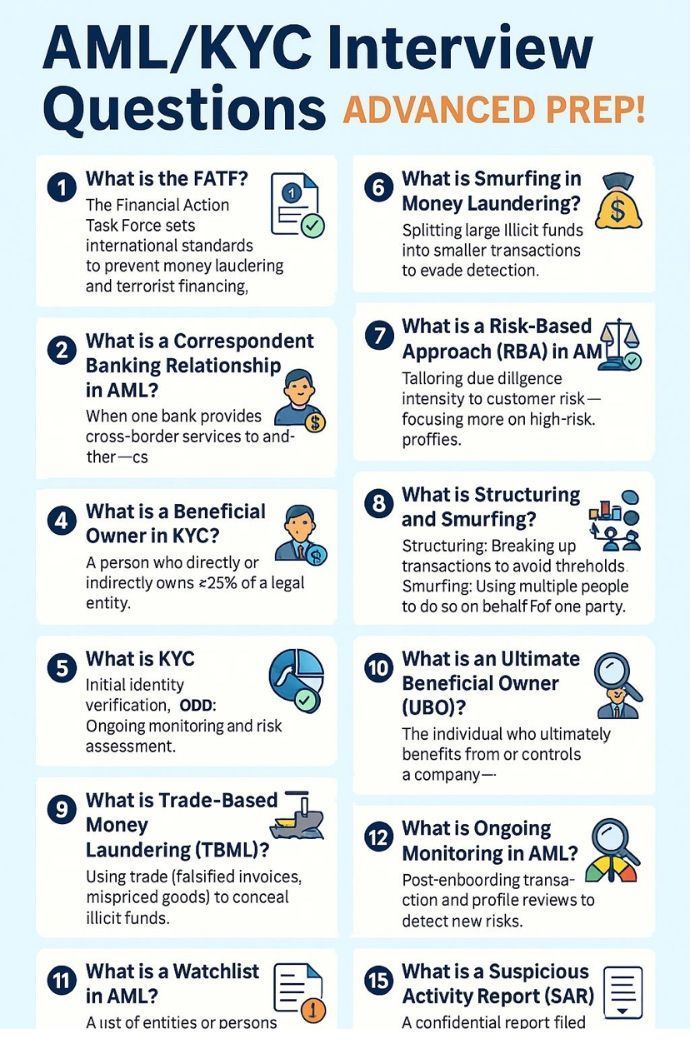
Round One: Diving into KYC Mechanics
This round was with the hiring manager, a bloke named Ben who seemed sharp. He skipped the small talk and jumped straight into the core of KYC. He wanted to know how deep my knowledge really went.
First thing he asked was about risk scoring. How do I approach it? I walked him through a basic model: jurisdiction, business type, transaction volume. I made sure to emphasize the importance of ongoing monitoring, not just the initial check.
Then, the scenario questions started hitting hard:
- “Describe the enhanced due diligence (EDD) process for a high-risk entity, say, a crypto exchange operating in a sanctioned jurisdiction.” I talked about deep UBO checks, source of wealth, and mandatory yearly reviews.
- “What’s the difference between CDD and EDD?” Easy enough, but I made sure to mention triggers that elevate a file from CDD to EDD.
- He asked about PEPs (Politically Exposed Persons). How do I handle them? I explained the mandatory sign-off from senior compliance and the rigorous ongoing scrutiny.
I also shared some real-world examples from my previous job where we caught some suspicious activity early on because we implemented a tighter UBO verification process. Ben seemed impressed that I wasn’t just quoting regulations but explaining how I’d actually implement them. This round was about 45 minutes.
Round Two: Policy and Regulation Deep Dive
The final round was with two senior compliance officers. This was less about process and more about policy and global regulations. They wanted to ensure I understood the wider compliance landscape.
They focused heavily on cross-border compliance, which makes sense since Airwallex is global. They asked me to compare regulatory environments—specifically the differences between FinCEN rules in the US and FCA requirements in the UK regarding transaction monitoring thresholds.
One difficult question was about dealing with ambiguity in regulations. They presented a situation where a new technology (they used embedded finance as an example) wasn’t explicitly covered by current AML rules. How would I draft a policy for it? I stressed using a principle-based approach—focusing on the intent of the regulation (preventing crime) rather than waiting for specific rules to catch up. I also mentioned constantly communicating with legal counsel and regulatory bodies.
We spent a solid 20 minutes discussing transaction monitoring alerts—how to tune them to minimize false positives without missing actual suspicious activities. I emphasized working closely with data scientists to optimize the alert generation system.
Finally, they asked the crucial question: “How do you maintain excellent working relationships with the sales and product teams when your job is often to say ‘No’?” I explained that compliance shouldn’t be a roadblock but an enabler. If I have to reject a client, I try to offer alternative, compliant solutions, or at least explain why we can’t proceed, helping them understand the risk profile.
That final round was intense, about an hour long. I walked out feeling drained but like I had really shown them my chops. Now, I’m just waiting to hear back—fingers crossed I nailed it!