Airwallex vs. Stripe: Payment Gateways vs. Global Accounts
You know, I’ve been messing around with cross-border payments for a while now, trying to figure out which platform really saves me the most hassle and, crucially, the most money. I started my journey, like most folks, thinking about the big names: Stripe. Everyone uses Stripe for payment processing, right? But then I hit a wall when I had to deal with receiving payments in different currencies and holding those funds without getting absolutely hammered by exchange rates and transfer fees. That’s when the other contender, Airwallex, popped up on my radar.
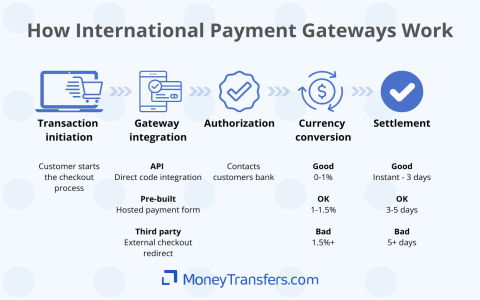
My first practice run was purely on the payment gateway side. I set up a simple e-commerce trial store. Getting Stripe integrated was dead easy. Their documentation is solid, their APIs are straightforward—I got the whole checkout flow working in an afternoon. Accepting credit card payments? Smooth as butter. They are the undisputed king of payment gateways, no doubt about it.
But then, the problem surfaced when I simulated receiving a payment from a customer in the UK in GBP, and I’m based in the US. Stripe forces you to convert that money pretty quickly, or it holds it, but the fees for holding and then transferring to my local US bank account? Ouch. It felt like I was losing a significant chunk just in the conversion spread they were offering.
So, I decided to shift gears and focus on global accounts and multi-currency management, which is where Airwallex shines. I opened a business account with them—that process took a couple of days because of the required KYC checks, definitely longer than just signing up for Stripe’s payment processing feature. Once I was in, though, the difference was immediate.

I set up local collection accounts in several major currencies: USD, EUR, GBP, AUD, HKD. This was the real game changer. Instead of the UK customer paying me in GBP and the money instantly getting converted to USD at Stripe’s rate, I told them to pay into my Airwallex GBP account. The money lands as pure GBP. No instant conversion tax.
I then tried holding the GBP. Airwallex lets you do this indefinitely in their wallets. This is crucial for hedging or just waiting for a better exchange rate before repatriating funds or paying a supplier overseas. I simulated paying a virtual vendor in Germany using the GBP I held. The transfer process was fast, and their FX rates for conversion—if I chose to move money between my own wallets—were noticeably tighter, meaning lower loss compared to what Stripe offered when processing and converting a foreign transaction on their platform.
The Stripe integration was built around transactional success at the point of sale; get the money in and move it out. It’s a pure payment processor first, and the multi-currency stuff is secondary, often feeling like an expensive afterthought if you manage high volumes of foreign currency.
The Airwallex setup felt like running a small global treasury operation. They have a decent payment gateway too, yes, but that’s not their primary strength. Their strength is giving you the equivalent of local bank accounts globally and handling the complexity of holding, converting, and transferring those funds efficiently.
My final practice conclusion was pretty clear: If 90% of your business is domestic and you just need to accept credit cards easily, Stripe is unbeatable. But if you deal with cross-border payments frequently, need to pay international suppliers, and desperately want to hold multiple currencies to avoid painful FX fees every time a dollar moves, Airwallex completely wins the game. I found myself actually linking Stripe to Airwallex for some operations—using Stripe for the front-end card acceptance efficiency and Airwallex for the back-end currency management and holding power. It’s not really an either/or; it’s about choosing the right tool for the specific job, and for managing global money, Airwallex easily stole the show.