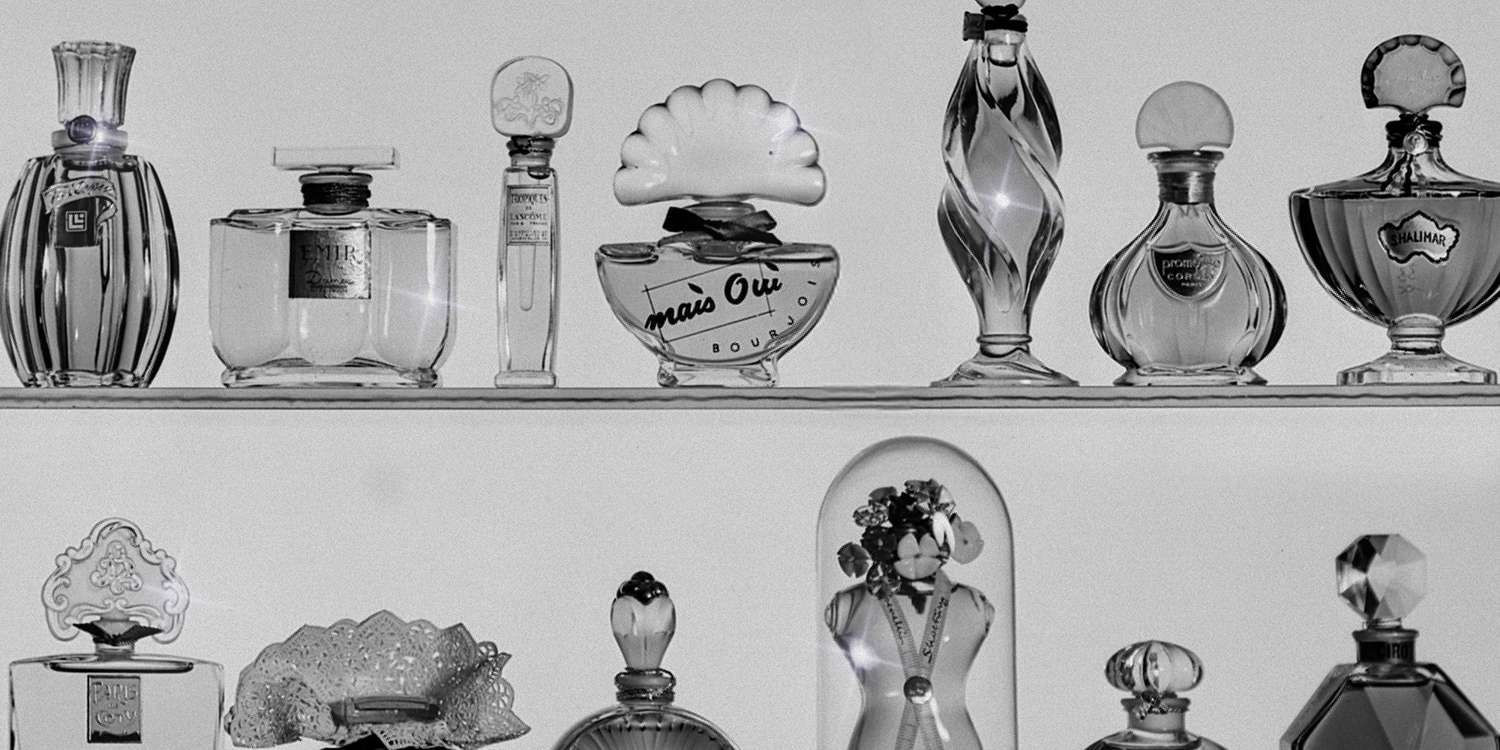
Once a beauty afterthought for many, fragrance has morphed into a main event. In the last few years, full fragrance wardrobes dethroned the signature scent, and #PerfumeTok created viral scent after viral scent—a feat considering users can’t actually smell them through their screens. 2025 was, perhaps, the most transformative year for fragrance yet; according to Nielsen data, it’s the fastest-growing category in beauty. So with more eyes (or in this case, noses) looking at perfume than ever, what’s next? We’re so glad you asked. According to Emma Vernon, host of the podcast Perfume Room, there will be a certain tenderness to fragrance in 2026; a retreat of sorts after a few years of experimentation. “I think people are seeking comfort again, whereas in the last five or six years, people have become more maximalist in taste,” she suggests. “At the same time, Pandora’s Box has been opened, and people are still looking for things that feel interesting, quirky, and niche.”
In other words, things in the perfume world are about to get interesting—but not completely unfamiliar. Read on for what we expect to come to this ever-evolving category, with insights from Vernon and more industry heavyweights.
Future Nostalgia
Call it a coincidence, or call it a trend: Vernon points out that in the back half of 2025, there were at least three vintage-inspired launches: Guerlain Shalimar L’Essence (in honor of the original’s 100th anniversary), Coty Ambre Antique, and Spoturno 1921. Rather than simply reissuing the classics, brands invigorated them with fresh iterations and updated ingredients. For instance, perfumer Christophe Sheldrake replaced animal materials from Spoturno’s 120-year-old formula with newer, more science-forward ingredients.
Further, Vernon sees aldehydes—the powdery, “soapy” notes associated with some of the original vanity icons, like Shalimar and Chanel No. 5—having a moment, but interpreted in a new way. “I think some of them will feel vintage and evocative of Chanel No. 5, and some of them are going to prove their versatility and [will be] poised as really futuristic,” she says. 11 11 Moon, Lake & Skye’s ethereal new addition, is already living up to that prediction, with zingy notes of coconut shavings and lemon zest that contrast the almost-metallic aldehydes.
Grown-Up Gourmand
Expect sweet perfumes to continue their reign—but with a new air of sophistication. “We’re continuing to see gourmand evolve but in a much more elevated, textured way,” says Julia Buonanno-Godec, senior marketing manager at DSM-Firmenich.
@yip.studio_ / Instagram
How that will play out, she says, is through “soft sweetness” like marshmallow and milky accords, layered with deeper notes. Something like “boozy vanilla that feels rum-drenched rather than cupcake-sugary,” muses Buonanno-Godec. “The sweetness is there, but it’s moodier and more dimensional.” DedCool’s Mochi Milk may be the blueprint for this category, but that’s with good reason: Its marshmallowy, lactonic base is mellowed with incense and sandalwood.
Beyond the Bottle
In an industry beloved for its innovative packaging, the bar is continually raised. Vernon believes more intentional packaging is on the way and nods to creativity when it comes to caps and labels.
New It brand Lore is a prime example: Its caps can be repurposed as a sleek candleholder after you’ve finished your bottle. “We wanted to challenge ourselves to rethink the experience a bottle can bring from everyday wear into everyday reuse,” explains Melanie Bender, Lore founder and CEO. “I think fragrance packaging is evolving beyond function to be felt equally as an object d’art.”
Vernon also predicts a smaller change—literally. “Now, most people have more than one scent, so people don’t want twenty 100-ml bottles, and brands are starting to take note of that,” she says. And it’s not the same old travel roll-on: “Arquiste and Kayali, for example, have bottles that are the exact same silhouette as their bigger bottles.”
Building Blocks
Per Pinterest’s “scent stacking” trend prediction for 2026, “Gen Z and millennials are ditching one-and-done scents for bespoke notes, blending oils and perfumes to craft fragrance formulas.” And while there will always be a place in our fragrance wardrobe for complex scents, stripped-down options may be better suited for this one.
“Layering is something that people have been doing for a few years, but the idea of layering every individual ingredient to create a final accord is a fun concept,” says Vernon, who says she started seeing gourmands “broken down to the simplest of ingredients” last year. “Instead of seeing a brownie accord or chocolate cookie accord, you would see butter, dough, salt, flour—all these pantry ingredients that would come together to create this thing if you were to bake it.” Think: Skylar’s recently launched Double Dates, with its notes of cinnamon and brown sugar, and Noyz’s Hair + Body Fragrance Mist in Salty, with top notes of pink sea salt and coconut water.
Jammy Fruits
Like gourmands, fruity fragrances are also having a moment. But instead of the punchy strawberry fragrances that have dominated the past few years, they’re veering more sensual. “Instead of bright, top-heavy profiles, we’re seeing plum and raspberry come through in darker, richer expressions,” says Buonanno-Godec. “They feel more jammy, sparkling, and sensual, often grounded with woods and musks.”
DTS
Two recent launches, Mugler Alien Pulp and YSL Libre Berry Crush, indeed highlight juicy raspberry. And while we’ll still see cherry and peach, they’ll be reimagined. “For example, with peach, instead of leaning into the juicy flesh, you might explore the woodiness of the pit,” says Buonanno-Godec. “With cherry, it’s less about syrupy sweetness and could be more about the waxy skin, the darker, almost polished side of the fruit.”
Fancy a Drink
Building on the popularity of Kilian Paris Angels’ Share On the Rocks and D.S. & Durga Cognac Reign last year, boozy scents are still an anchor heading into 2026. Bender even notes that Sephora curated an entire “boozy fragrance” category on its website, including Disfruta, a genderless fragrance from Lore that evokes smoky mezcal. “It swirls like a cocktail, equal parts perfume and escapism,” she explains.
And don’t worry: There are scents that appeal to every beverage lover: “Coffee and tea notes keep expanding as well. What started as sweet latte-style scents has moved into more nuanced territory like espresso and matcha,” says Buonanno-Godec. Case in point: Elorea’s Heaven is made with Korean green tea, and Kayali Freedom Musk Latte is like your favorite drink, bottled (and only in the aforementioned shrunken-down size).
Smell Good to Feel Good
Perfume has always been tied to mood, and perfumers are tapping into that emotional connection. Ayurvedic beauty brand Ranavat recently launched a range of fragrances with notes designed for intention-setting, and don’t be surprised if you see the words “mood-boosting” on more than a few upcoming launches.
DTS
Beyond aromatherapy, more holistic lenses are being explored, from reducing allergens to ethical ingredient sourcing. “People want what they put on their bodies to work harder for them,” says Buonanno-Godec. “It’s no longer just about smelling good but asking, ‘what does this do for me?’” Expect to see more alcohol-free formulas (à la Bella Hadid’s Orebella line), while more may have “skin-friendly” ingredients like Rare Beauty’s body mists that feature niacinamide.
In general, consumers care more about what they’re spritzing on their bodies. “There’s increasing pressure around transparency, from ingredient disclosure to sourcing and sustainability,” says Buonanno-Godec. Transparency is core to what Bender is cooking up at Lore. “We’re developing a new framework bringing conservation biologists into the product development process with us,” she says. “I want to get us all moving a little bit more slowly. To get us open to asking more questions and pushing for answers.”
Going Indie
The rise in independent perfumers has changed the game in recent years. “There’s a mix of self-taught YouTube University perfumers, people who have classical training who went independent, and everything in between,” explains Vernon. Still, the bigger perfume houses aren’t being left behind. “They’re up against people who have no corporate constraints. They can push the envelope a little bit more, and it’s fueling more creativity,” Vernon adds.
It’s impossible to narrow down our favorites, but just a few on our radar: Heretic Parfum, with a library of unexpected accords; Octavia Morgan, the first Black-owned and woman-founded prestige fragrance brand to enter Ulta Beauty; and Perfumehead, a collection of heady, concentrated scents that smell unlike anything else.
No matter your scent portfolio, there’s something new—and decadent—for everyone to explore in 2026.